Dec 27, 2025 You buy a toilet thinking it'll be easy. Then you get it home and realize it blocks the door, or crowds the vanity, or leaves your knees hitting the wall every time you sit down. Standard toilets come in dimensions that work for average spaces, but bathrooms don't always cooperate. Older homes and tight powder rooms, especially. At Acknowledge Plumbing, we've seen customers deal with returns, modifications, and plumbing adjustments all because the measurements didn't line up the way they expected. Read more to find out about the sizing factors most people overlook and what options exist when a typical fixture won't cut it.
Rough In Measurements and Why They Vary Between Homes
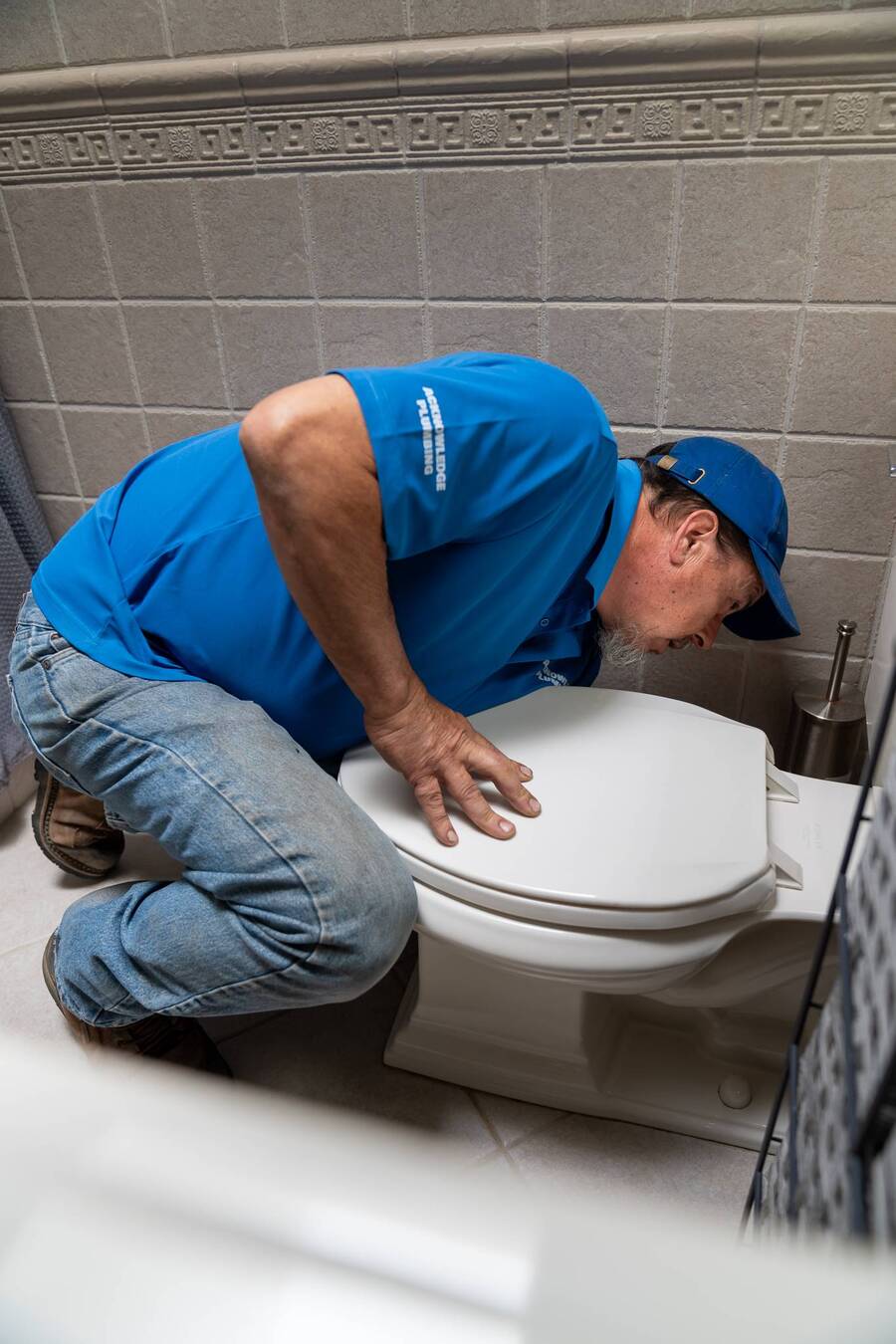
The rough-in measurement determines whether a toilet will connect to your existing drain. This number represents the distance from the finished wall to the center of the drainpipe, and most big box stores stock toilets designed for a 12-inch rough-in. Many homes built before 1950 have 10-inch or 14-inch rough-ins because plumbing codes and construction practices varied by region and decade. If you buy a 12-inch toilet for a 10-inch rough-in, the tank will press against the wall, or won't mount at all. A 12-inch toilet on a 14-inch rough-in leaves an awkward gap behind the tank that collects dust and looks unfinished. Measure from the wall to the bolt caps on your current toilet before you shop. Don't measure from the baseboard. The extra half inch of trim will throw off your calculation and send you back to the store. A plumber can verify your rough-in during a standard service call if you want to eliminate guesswork before making a big purchase.
Round vs. Elongated Bowls in Tight Floor Plans
Bowl shape affects comfort and clearance. Elongated bowls extend two inches farther into the room than round bowls. It's a minor difference until you're working with a bathroom that measures five feet by six feet. In a half bath tucked under a staircase or carved out of a hallway closet, two inches determines whether you can close the door while seated. Builders installed round bowls in compact bathrooms for decades because the shorter profile preserved walking space and door function. Elongated bowls became the default in new construction during the 1990s when master bathrooms grew larger, and comfort took priority over efficiency. If your home predates that, check the current bowl shape before assuming an elongated toilet replacement will work. Swapping to elongated without measuring can block cabinet drawers or restrict the shower entry.
Backflow happens when contaminated water from outside your pipes reverses direction and…
Read More Water leaks, whether apparent or hidden, are a homeowner's nightmare. They can…
Read More When expanding your living space with an Accessory Dwelling Unit or a…
Read More From unexpected backups to soggy lawns, the signs of a failing septic…
Read More Do you want to keep your lawn and garden lush and vibrant,…
Read More Our Services
Acknowledge Plumbing provides 24-hour residential and commercial plumbing repair & installation services in Sacramento County and all surrounding areas. Call our office now to schedule a nearby plumber.
How Door Swing and Clearance Affect Toilet Placement
Building codes require a minimum of 15 inches from the center of the toilet to any side wall or obstruction. They also require 21 inches of clear space in front of the bowl. A toilet crammed against a wall makes cleaning nearly impossible and creates an uncomfortable experience. The door swing complicates placement further. Inswing bathroom doors are common in older homes where hallway space was limited. If the door swings inward and the toilet sits near the door's path, a deeper tank or longer bowl can interfere. In some toilet replacement projects, the homeowner selects a new model with a taller tank profile that prevents the door from opening past 45 degrees. The fix requires either rehanging the door to swing outward or selecting a compact model with a shallower tank depth. Grab a tape measure and swing your door fully open before you buy anything.
Compact and Corner Models Worth Considering
Manufacturers now produce toilets specifically engineered for tight installations. Compact elongated models deliver the comfort of a longer bowl in a footprint closer to round dimensions. These units achieve a smaller size through bowl geometry rather than shrinking every component. Saniflo, Kohler, and TOTO all offer compact options with bowl lengths around 25 to 27 inches compared to the standard 30 inches. Corner toilets mount diagonally across a corner and work well in converted closets, basement additions, or awkward layouts with angled walls. The triangular tank tucks into the corner while the bowl angles into the room. This configuration opens floor space along both adjacent walls. Wall-mounted toilets eliminate the floor footprint problem entirely. The tank hides inside the wall cavity, and the bowl cantilevers out from a steel carrier frame. Installation costs run higher because a plumbing repair service in Citrus Heights, CA requires opening the wall, installing the carrier, and verifying proper support before closing everything up. Wall-mounted units also simplify floor cleaning since no base contacts the tile. If your bathroom requires creative solutions, these specialty models exist for situations where standard fixtures fail.
Making the Right Choice for Your Space
Toilet shopping requires more than picking a style you like at the showroom. Measure your rough in distance and record the space from the side walls and the vanity. Open and close the door while visualizing the new fixture in place. Write down every number before you browse the inventory. A plumber can look at your bathroom during a walkthrough and recommend specific models compatible with your layout. If you find out that no standard toilet fits your space without major compromises, specialty compact and corner units can offer real solutions rather than forced workarounds. Some situations call for relocating the flange, which involves cutting concrete or subfloor but delivers a permanent fix that opens up future fixture options.
Do You Need a New Toilet or a Plumbing Repair Service?
Acknowledge Plumbing handles every step of the process. We measure, advise, supply, and install. Our plumbing repair service covers everything from simple swaps to complicated repositioning when the existing layout doesn't support standard equipment. Call us before you buy a toilet that ends up sitting in your garage. We'll make sure the fixture you choose fits the space you have.